
In The Apothecary Diaries, Jinshi’s biological mother is Lady Ah-Duo, also known as the Pure Consort. At HariManga, we see this question trend because the anime intentionally frames Jinshi’s family background as a court mystery, not a simple character bio.
The story also uses palace “official narratives” where titles, rumors, and public records matter as much as bloodlines, so fans hear multiple answers and assume the series contradicted itself. It did not.
This guide breaks down the spoiler-free version first, then explains the real answer, the baby swap logic, and why the palace would rather protect a lie than admit the truth.
Who Is Jinshi’s Mother? Spoiler-free answer
If you want the shortest safe answer without unpacking later reveals: Jinshi’s mother is Lady Ah-Duo, but the palace environment makes it look like he belongs to a different “official” family line.
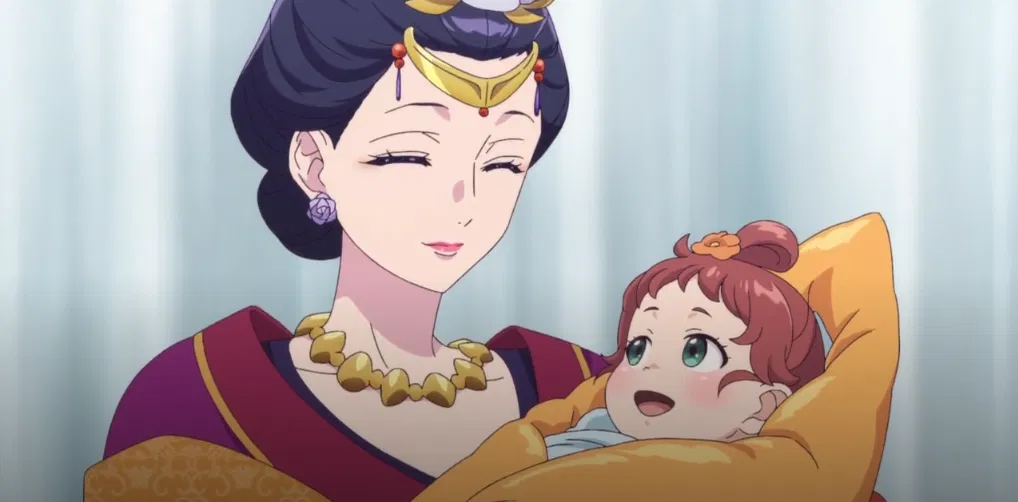
Why it feels confusing in Season 1 is not because the story is sloppy. It is because the series is built around court logic where public identity is curated. In this setting, people do not talk about parentage the way modern characters do. They talk in titles, ranks, and acceptable stories. Even if someone suspects the truth, repeating it is dangerous.
So in spoiler-free terms, the show gives you three signals at once:
- Jinshi’s connection to Ah-Duo feels personal and unusually emotional
- Their resemblance is emphasized enough to make viewers suspicious
- The palace still provides alternative “explanations” that muddy the water
If you are anime-only, treat parentage as a hidden variable. The show wants you to notice the mismatch and feel uneasy, because that unease is the correct reaction.
Direct canon answer
Jinshi’s biological mother is Lady Ah-Duo, the Pure Consort.
That is the real, behind-the-curtain answer. The reason you see other answers online is because people mix up three different meanings of “mother” inside a royal court story:
- Biological mother: who gave birth to the child
- Official mother: who the palace record implies the child belongs to
- Social mother: who is allowed to act as “mother” publicly under palace rules
In The Apothecary Diaries, those three definitions do not always point to the same person. Jinshi’s story is one of the clearest examples.
Who is Lady Ah-Duo?

Lady Ah-Duo is not just a name you memorize. She is a character who represents the palace’s long memory, the kind of person whose decisions echo for years.
Ah-Duo’s public identity in the palace
Ah-Duo is known as the Pure Consort, a high-ranking figure within the Emperor’s inner circle. Her status gives her visibility and influence, but it also makes her a target. In a court environment, high rank does not mean safety. It means scrutiny.
Ah-Duo is portrayed as composed and dignified, with the emotional discipline of someone who understands that one careless expression can become gossip, and gossip can become a weapon.
Why Ah-Duo stands out compared to other court figures
Many court stories rely on loud villains and obvious alliances. Ah-Duo is different. Her presence feels quiet, strategic, and heavy with history. Even when she is not dominating a scene, she changes the room’s temperature. Characters react to her with a kind of careful respect that suggests she is not merely a decorative consort.
This matters for the mother question because the series does not reveal Jinshi’s parentage with a big announcement. Instead, it lets you feel that Ah-Duo belongs to the “real story” behind the palace’s surface story.
The resemblance clue and why it is not accidental
The anime frequently invites viewers to notice how similar Jinshi and Ah-Duo look. This is one of the oldest storytelling methods for hidden parentage, but it works here because the series uses it as a slow-burn clue rather than a shortcut.
The resemblance functions like a pressure crack. Even if the palace lies, faces do not lie as easily, and Maomao’s entire strength is noticing what others ignore.
Why people think Jinshi’s mother is someone else
If you have seen fans argue that Jinshi’s mother is Empress Dowager Anshi, or that Jinshi belongs to another imperial branch, they are reacting to how the anime structures information.
The palace produces believable “official stories”
In a palace, a story does not need to be true to be powerful. It only needs to be repeatable. The court thrives on narratives that protect stability and protect the people who hold power.
If Jinshi’s identity is politically sensitive, the palace would prefer a clean, socially acceptable explanation that prevents uncomfortable questions.
Titles confuse modern viewers
Modern audiences expect parentage to be spoken plainly. Court stories often avoid that. Characters refer to each other through titles, ranks, and public roles rather than explicit family labels. When viewers hear those titles, they try to translate them into modern family terms and can end up with the wrong conclusion.
Season 1 is designed to maintain mystery
The first season gives you enough information to suspect a deeper truth, but not enough to confirm it cleanly. That is deliberate. The series is not just a medical mystery. It is also a lineage and legitimacy mystery.
So the conflicting answers you see online are often not “wrong,” they are answers to different questions:
- Who does the palace want people to think his mother is?
- Who does the anime want viewers to suspect?
- Who is his biological mother?
The baby swap explanation (why the “mother” question becomes messy)
The simplest way to understand this reveal is to understand the mechanism: a baby swap creates a gap between biology and public identity.
This is not a gimmick. It is a story tool that explains why Jinshi can exist in a powerful position while still being forced to hide.
What happened in plain language
Jinshi was born to Ah-Duo. Around the time of his birth, palace circumstances made survival and political safety uncertain. A switch was arranged so that Jinshi would be raised under a different public identity than his birth identity.
Because of this, many people inside the palace do not treat Ah-Duo as his mother in the “official” sense, even if biology says otherwise. The court prefers “stable paperwork” and “stable stories” over personal truth.
Why a swap changes how people label a mother
In a normal family, biology and social recognition align. In the palace, recognition is a political decision. If the child is officially recognized as belonging to a different line or role, then court etiquette and palace records will behave as if that is the truth.
This leads to the most important point for readers:
You can read the story and see characters sincerely behave as if Jinshi’s mother is someone else, without those characters being stupid. They are behaving according to the only safe story they are allowed to live inside.
The three “mother” definitions and how they split
To keep your article or explanation clean, use these definitions:
Biological mother: This is Ah-Duo, full stop.
Official mother: This is whoever the palace’s public narrative implicitly assigns, depending on how the swap was framed.
Social mother: This is the person who can publicly act in a maternal role without triggering political suspicion.
The baby swap makes those three categories point in different directions.
Why would Ah-Duo do something that extreme?
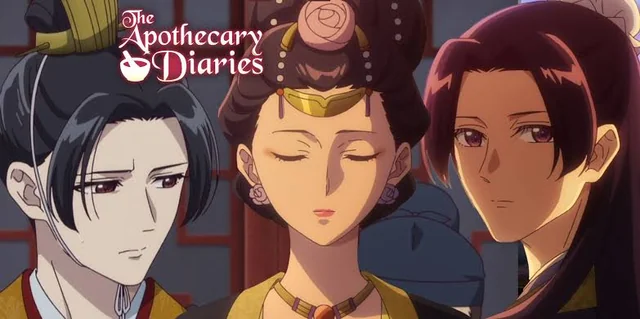
A baby swap sounds dramatic, but in court survival math it can be rational.
Medical priority and survival odds
Palace childbirth is not only a medical event. It is a political event. Who receives care first can reflect who matters more. If Ah-Duo’s position meant her child would receive less protection at a critical moment, a swap could be viewed as a brutal form of triage.
In other words, the decision is not “romantic.” It is protective. It is a mother choosing the path that increases survival probability, even if it destroys the possibility of a normal mother-child relationship.
Palace politics turns children into leverage
In a court environment, a child with imperial significance becomes a magnet for factions. Some will want to control the child. Some will want to remove the child. Some will use the mother as a handle to manipulate outcomes.
A swapped identity can redirect that pressure. It can shift which factions pay attention, which factions feel threatened, and which factions consider the child “their problem.”
A mother’s power can shrink after childbirth
Court stories often emphasize that a woman’s security can change overnight due to health, favor, and shifting alliances. If Ah-Duo believed she would not be able to protect her son long-term, moving his “official” protection elsewhere could be a strategic choice.
The core theme: the palace prefers stability over truth
The series repeatedly shows that the palace will protect a convenient lie if the lie prevents chaos. Ah-Duo’s decision fits this theme. A stable false narrative can be safer than a volatile truth.
How the anime hints at Jinshi’s mother without stating it outright
The anime uses classic visual and emotional cues to lead you toward the truth while preserving ambiguity.
Visual parallels and framing
Repeated shots emphasize Jinshi and Ah-Duo as reflections of each other. The direction encourages viewers to compare them, even if nobody says the word “mother” on screen.
Maomao’s observational role
Maomao is the audience’s proxy for rational noticing. When she sees a pattern, the story expects you to treat it as evidence, not gossip. The series uses her reactions to validate the idea that resemblance and behavior matter more than court rumor.
Emotional weighting of certain scenes
When Ah-Duo’s presence affects Jinshi more than expected, the show is signaling that their bond is not merely political. It is personal in a way that the palace cannot safely name.
Jinshi’s relationship with Ah-Duo (why it feels emotionally heavy)
Even before the story gives the full explanation, their connection carries a unique weight.
Jinshi’s control versus Jinshi’s vulnerability
Jinshi is a character who manages perception. He is usually composed. He is used to controlling rooms with presence. When Ah-Duo is involved, that composure can crack.
This matters because it tells the viewer: whatever this relationship is, it reaches deeper than rank and etiquette.
Ah-Duo’s restraint and the tragedy of distance
Ah-Duo is not written as a mother who openly claims her child. She is written as someone constrained by the palace. That restraint reads as dignity on the surface, but it also reads as grief if you understand what she is withholding.
The story’s emotional strategy is subtle: it makes you feel the cost of secrecy before it explains the details.
Why the truth cannot be spoken safely
Even if two people know the truth, the palace is not a place where truth is an emotional release. Truth is an explosive object. Speaking it can reshuffle power and invite retaliation. That is why the relationship remains coded rather than declared.
What this reveal changes about Jinshi as a character
Once you accept Ah-Duo as Jinshi’s mother, Jinshi stops being just “the beautiful, mysterious palace official.” He becomes a character shaped by structural secrecy.
His obsession with control becomes more understandable
A life built on curated identity produces people who cling to control. Jinshi’s need to manage outcomes and people is not only personality. It is survival behavior.
His public persona becomes a defensive architecture
Beauty, charm, and authority are not just traits. They are tools. If the palace focuses on Jinshi’s surface image, it is less likely to interrogate what lies underneath.
His emotional reactions gain a hidden context
Some of Jinshi’s strongest reactions can look excessive until you understand that certain palace figures are not merely colleagues, but family, history, and danger wrapped together.
His connection to the Emperor becomes more complex
Without turning this into a full succession analysis, the key point is that Jinshi’s family truth affects how you read every decision involving hierarchy. Even small moments carry weight because the “public story” is not the whole story.
How this affects Maomao and the main relationship tension
Maomao and Jinshi are the series’ emotional and narrative core, but their dynamic is not only romance.
Maomao is a truth-seeker in a system that punishes truth
Maomao solves problems by naming causes. The palace solves problems by naming acceptable stories. Jinshi lives inside the palace’s story-management machine, which is why he is both fascinated by Maomao and threatened by what she can uncover.
Jinshi wants closeness, but secrecy demands distance
One reason Jinshi’s relationships feel tense is that he cannot fully be a normal person. If his identity is politically sensitive, intimacy becomes risky. People close to him become targets, willingly or not.
The mother reveal reframes trust
After you understand Ah-Duo’s role, you can reread earlier scenes and notice that trust is always negotiated. Characters are not only deciding what to do. They are deciding what can be said.
FAQ
Who is Jinshi’s mother in The Apothecary Diaries?
Jinshi’s biological mother is Lady Ah-Duo, the Pure Consort.
Why do some people say Jinshi’s mother is Empress Dowager Anshi?
Because the anime and palace “official narratives” create a plausible alternative interpretation early on. Court titles and political storytelling make parentage deliberately unclear.
Is Ah-Duo really Jinshi’s biological mother?
Yes. The series’ underlying reveal supports Ah-Duo as his biological mother, while explaining why the palace does not publicly treat her as such.
Why is Jinshi’s parentage hidden?
Because in a palace, lineage is political power. Revealing the truth can destabilize factions, threaten people involved, and create succession-level consequences.
Does Jinshi know who his mother is?
Depending on how far you are in the story, the question is part of the ongoing tension. The palace is designed to keep certain truths compartmentalized.
Is this reveal a spoiler?
Yes. If you are anime-only, treat any detailed explanation of the baby swap and official identity as spoiler territory.
So, who is Jinshi’s mother? The real answer is Lady Ah-Duo, the Pure Consort. The reason the fandom debates it is not because the story contradicts itself, but because The Apothecary Diaries is a court mystery where public identity can be engineered, and where “mother” can mean biology, official record, or social permission.
Once you understand the baby swap logic and the palace’s preference for stable narratives, the confusion disappears, and Jinshi’s character becomes even more compelling on reread.
You may also like:
How Old Is Maomao Apothecary Diaries?
The Apothecary Diaries Characters: A Complete Guide to the Main Cast and Key Figures
How Old Is Jinshi Apothecary Diaries?
