
The One Piece manga has no officially announced end date. Based on Eiichiro Oda’s confirmed “Final Saga” positioning, his recent public messaging about 2026 as an endgame acceleration point, and the real-world pace of chapter releases, the most realistic forecast is around 2029 to 2032, with 2030 to 2031 as the most practical midpoint.
HariManga team share: Any site that gives you a single “confirmed ending year” is usually selling certainty the industry cannot honestly provide. The better approach is to read the ending like a production timeline: milestones, remaining narrative payload, and how many chapters Oda can actually ship per year.
When Will One Piece Manga End? Quick Answer
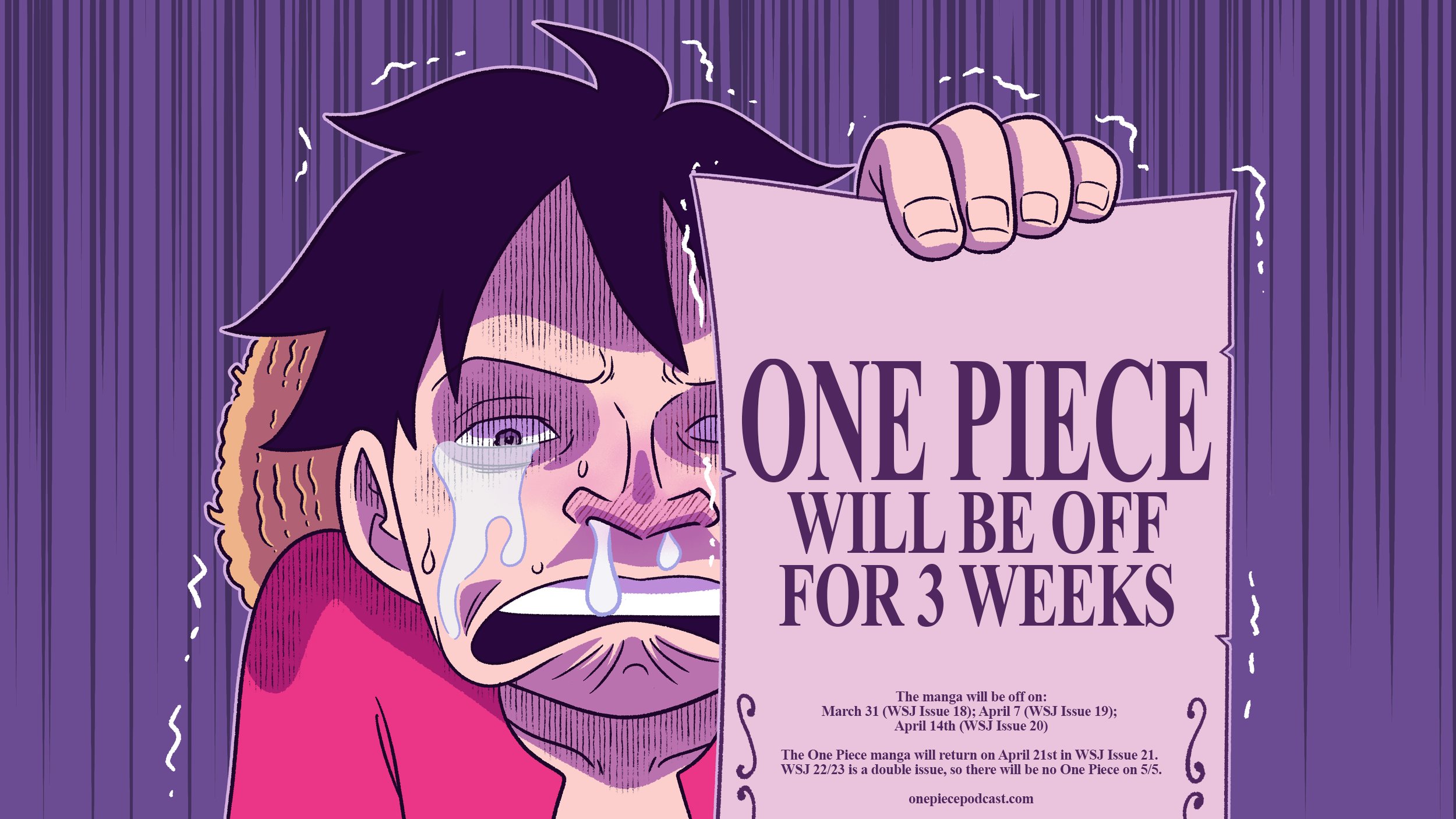
- Official status: No end date has been announced by Oda or Shueisha.
- Most defensible window: 2029 to 2032
- Why not earlier: The Final Saga is active, but the remaining reveals and the final conflict require substantial on-panel runway, and One Piece’s modern serialization cadence makes “soon” slower than it sounds.
If you only need one line for readers: One Piece is in its Final Saga, but the ending is still likely several years away, most plausibly around 2030 to 2031.
How We Estimate the Ending Without Guessing Blindly
A reliable ending forecast for a long-running manga uses three lenses:
- Author and publisher signals
These are the rare statements that define macro structure, such as “Final Saga,” and messages that tease specific endgame destinations. - Narrative workload
This is the amount of story that must still happen on-panel: the final route, the final truth, the final war, and the epilogue. - Production reality
Modern One Piece chapters do not release at a perfect weekly cadence. Oda’s health-first pacing and scheduled breaks are part of the math.
With that framework, here are the nine definitive clues that matter.
The 9 Definitive Clues You Can’t Ignore
Clue 1: “Final Saga” is official, and it has been treated as a real structural shift since 2022
Oda’s month-long break in mid-2022 was explicitly framed as preparation for the Final Saga, and the story’s direction since then has behaved like an endgame: more world movement, faster faction convergence, and less “standalone island adventure” energy.
Why this is a major ending signal
- Final Saga is not the same as “final arc,” but it does mean the series has left the middle-game.
- Endgame storytelling tends to spend more chapters on payoffs than on setup, which changes the pacing style.
What it does not mean
- It does not mean “the manga ends next year.” A “final saga” can still be multi-year, especially in a story with this many unresolved global threads.
HariManga team share: In One Piece terms, “Final Saga” is like saying “we’re in the last act,” not “we’re on the last page.”
Clue 2: Oda has repeatedly given time estimates, and they consistently slip
Oda has publicly shared “years left” type estimates before, including the widely repeated “about 4 to 5 years” sentiment from around 2020. The important lesson is not that Oda was “wrong,” but that serialization expands.
Why Oda’s estimates slip
- New essential characters and faction conflicts become unavoidable.
- Flashbacks demand emotional space, not just information dumps.
- Weekly manga pacing changes with health and sustainable workflow.
What this clue tells you
- The ending is not decades away, because Oda is clearly aiming for closure within a manageable horizon.
- But any precise year should be treated as a range, not a promise.
Clue 3: Oda’s Jump Festa 2026 message frames 2026 as a major endgame acceleration point
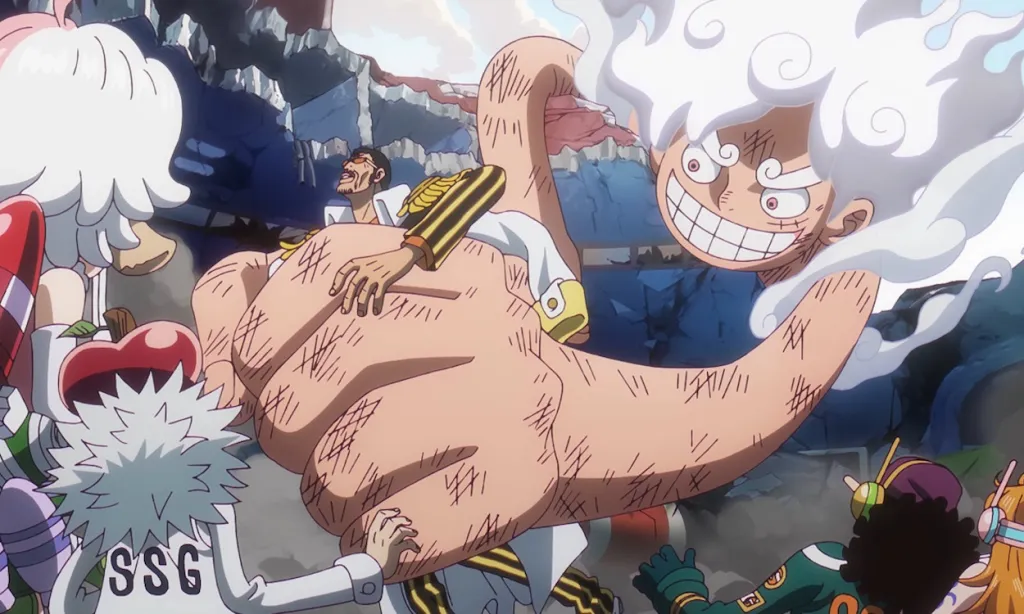
In Oda’s annual Jump Festa message released in late December 2025 (for 2026), he teases 2026 as a “year of encounters,” explicitly calls out the “man with the burn scar,” and strongly implies the story is heading toward the island tied to the Pirate King’s endgame route.
Why this matters
- This is an author-level signal that 2026 is not “another normal year.”
- When Oda starts pointing the narrative compass toward the final destination, he is telling you the story is moving from “journey” to “arrival.”
What it suggests
- 2026 is likely a waypoint year where the story locks crucial endgame pieces into place.
- Waypoint year does not equal ending year. It usually means the dominoes are being set up for the final sequence.
Clue 4: “Approaching the final island” is not the end, it is the start of the end
Even if the manga reaches the final island or the final-route stage in 2026 or shortly after, that still does not close the series. In One Piece, “arrival” creates bigger obligations:
- Truth revelation (Void Century-level information)
- World reaction (political destabilization across the seas)
- Final conflict ignition (the war that follows the truth)
In other words, reaching the final destination is the midpoint of the finale, not the finish line.
Why fans underestimate this step
- Many readers imagine a single “Laugh Tale arc” that ends everything.
- One Piece is built like a global political epic. The truth is designed to cause a world-scale eruption, not a quiet wrap-up.
Clue 5: The remaining mysteries are too large to be resolved quickly without breaking Oda’s storytelling style
One Piece’s ending requires answers that have been built for decades. At minimum, most readers expect satisfying clarity on:
- What the One Piece is and why it matters
- Void Century history
- Joy Boy and inherited will
- The Will of D
- Ancient Weapons and their consequences
- The true shape of the World Government’s power
- The meaning of the “new dawn” theme
Oda’s typical payoff structure for a major mystery includes:
- a reveal sequence,
- a reaction sequence,
- a flashback or contextual sequence,
- and a consequence sequence.
That is why the ending cannot be “fast” in the way rumors claim. Even with efficient pacing, these are not one-chapter answers.
HariManga team share: Oda rarely “tells” you the truth. He makes the world live through it, and that costs chapters.
Clue 6: The final conflict is almost certainly a multi-faction war, which usually means multi-year serialization
One Piece has long positioned a final collision of power blocs: pirates, Marines, the World Government’s core authority, and revolutionary forces. A climax of that size tends to be:
- one of the longest arcs in the series, or
- a cluster of arcs that function as one continuous final war saga.
Why this matters
A multi-faction endgame requires page time for:
- alliances to form and break,
- simultaneous battles across locations,
- big reveals mid-conflict,
- aftermath and restructuring of the world.
A “final war” in a manga of this scale rarely fits into a short window without feeling rushed.
Clue 7: Chapter output per year makes the calendar longer than fans want
A practical forecast must respect production reality. Modern One Piece does not publish a perfect 45 to 48 chapters every year. Breaks, holidays, and health-first pacing reduce the yearly total.
A conservative, realistic planning range is:
- mid-30s to low-40s chapters per year on average in modern conditions.
Now translate story needs into chapters:
- If the manga needs 120 chapters, that is roughly 3 years.
- If it needs 180 chapters, that is roughly 4 to 5 years.
- If it needs 240 chapters, that is roughly 6 to 7 years.
When you list the remaining narrative workload (final-route steps, final island truth, final war, epilogue), it becomes hard to argue that the remaining story fits comfortably under ~120 chapters.
Clue 8: Oda’s “faster pace” comments usually mean denser chapters, not immediate conclusion
Oda has signaled that the story will move at an unusually fast pace going forward, including language that frames 2026 as intense. In practice, Oda “speed” tends to look like:
- more reveals per chapter
- more world cuts per chapter
- less downtime between major beats
- more simultaneous plot threads
This accelerates progress, but it does not magically compress the number of chapters required to pay off decades of setup.
How to interpret “faster One Piece”
- Expect fewer detours.
- Expect heavier chapters.
- Do not expect the manga to end within a year or two solely because the pace feels quicker.
Clue 9: The franchise is positioned for an ending era, but not an immediate ending
This clue is about ecosystem signals, not hype. In the final era of major shonen manga, you typically see:
- increased emphasis on endgame milestones,
- more direct author messaging about “the route ahead,”
- major characters converging,
- and more consistent “world” storytelling.
One Piece is clearly in that phase. But the fact that it is in the ending era does not remove the structural truth: the ending still has to be earned on-panel.
So When Will One Piece End? A Realistic Forecast
Rather than pretending there is one correct year, the most honest answer is a scenario range.
Aggressive scenario: 2028 to 2029
This requires multiple things to go right:
- the story reaches final-route milestones quickly in 2026,
- remaining arcs stay tightly scoped,
- the final conflict is relatively streamlined,
- chapter output remains stable without major extended hiatuses.
This is possible, but it assumes unusually efficient closure for a series this dense.
Base-case scenario: 2030 to 2031
This is the most practical midpoint because it accounts for:
- a major 2026 waypoint,
- a substantial truth-and-history stretch,
- a full-scale final conflict,
- and an epilogue that actually breathes.
If you need a single “working assumption” for planning content, this is the safest.
Conservative scenario: 2032 or later
This becomes likely if:
- the final conflict expands into multiple major phases,
- additional essential flashbacks are required,
- or chapter output slows due to health and sustainability.
HariManga team share: If you are building SEO content, avoid locking your headline to a single year. Use a window. That is both more accurate and more resilient as new official messages drop.
How to Track the Ending Without Getting Misled
If you want to follow the ending timeline responsibly, use these rules:
- Trust structure words, not rumor words. “Final Saga” is meaningful. Random “ending confirmed” posts are not.
- Measure by milestones, not vibes. The biggest milestones are: final-route pieces secured, final island truth revealed, final war initiated, epilogue began.
- Think in chapters, then convert to years. Calendar estimates are only useful after you estimate how many chapters remain.
Practical milestone checklist
If you want a simple AIO-friendly set of markers, watch for these on-panel events:
- Final route requirements fully resolved
This is when the “we can reach it now” stage becomes undeniable. - The central historical truth revealed
This is when the story’s hidden spine is finally shown. - World-scale conflict becomes unavoidable
This is when the final war is not a threat, but an active event. - The new world order begins forming
This is the start of the epilogue era, when the manga shifts from conflict to settlement.
FAQ
Is there an official date for when the One Piece manga ends?
No. There is currently no officially announced end date.
Did Oda confirm the manga ends in 2026?
No. 2026 is framed as a major endgame waypoint, but that is not the same as the series ending.
What does “Final Saga” actually mean?
It means One Piece has entered its endgame era, where remaining arcs are designed to converge toward the conclusion. It does not mean “final chapter soon.”
What is the most realistic ending year?
A realistic forecast window is 2029 to 2032, with 2030 to 2031 as a practical midpoint.
Why do Oda’s time estimates keep changing?
Because long serialization expands: arcs grow, reveals need emotional runway, and sustainable pacing introduces more breaks.
Could One Piece end in 2028?
It is possible, but it would require unusually tight arc lengths, stable chapter output, and a streamlined final conflict.
Why can’t the final mysteries be resolved quickly?
Because One Piece’s core mysteries are interconnected and typically require reveal, reaction, context, and consequence sequences to feel earned.
Is the final war likely to be one arc or multiple arcs?
It could be one extremely long arc or a cluster of arcs that function as one continuous final war saga.
What is the biggest “ending marker” to watch for?
When the story clearly enters the phase where the final destination is reachable and the major historical truth begins unfolding on-panel, you are in the countdown era.
How should I answer “when will One Piece end” in one sentence?
One Piece has no official end date, but based on Final Saga positioning and realistic chapter pacing, the manga most likely ends around 2030 to 2031, give or take a couple of years.
You may also like:
How Old Is Makima? 5 Brutal Facts Fans Keep Missing
Why Did Makima Kill Power? 9 Dark Facts Fans Still Can’t Accept
One Piece Manga Characters: 19 Brutal Villains You’ll Never Forget
