
The Apothecary Diaries characters are built around two worlds that constantly collide: Maomao’s practical, medicine-first mindset and the palace’s reputation-first politics.
In simple terms, the cast splits into Maomao’s circle (apothecary knowledge, pleasure district roots) and the Inner Court circle (Jinshi, consorts, attendants, and power brokers).
At HariManga, we keep seeing one recurring pain point: new readers love the mysteries, but get lost in names, titles, and ranks. This guide is designed to be spoiler-light while still giving you enough detail to remember who matters, why they matter, and how they connect.
The Apothecary Diaries Characters: Quick cast map for first-time readers
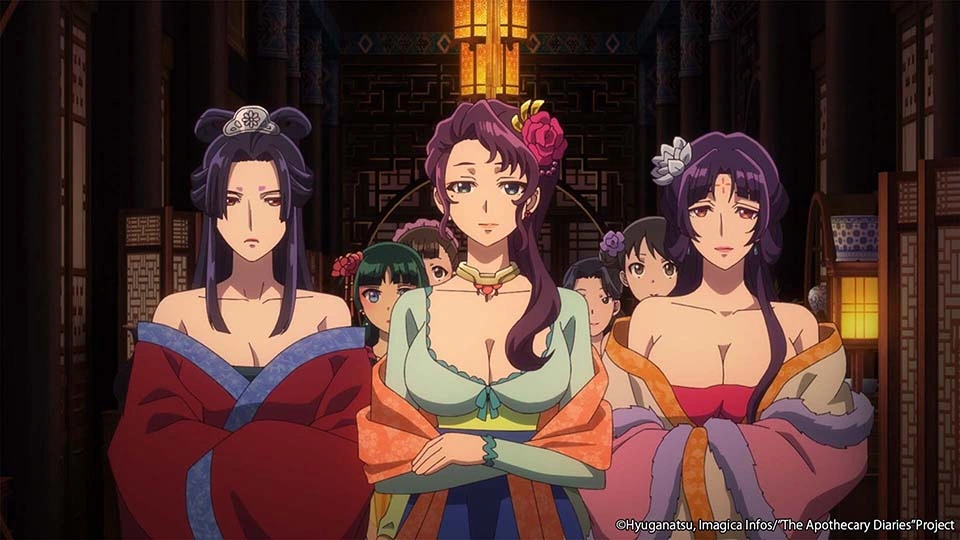
If you want a fast mental model before diving into details, group the cast like this:
The core duo
- Maomao: the poison-savvy apothecary who solves problems nobody else can.
- Jinshi: the beautiful and powerful palace official whose public image is never the full truth.
The palace system around them
- Gaoshun: Jinshi’s right-hand man, the stabilizer, and the adult in the room.
- The consorts: women of status in the Inner Court who shape political currents.
- Ladies-in-waiting and attendants: the information network. They see everything.
Maomao’s roots outside the palace
- Luomen: the medical mentor figure who shaped Maomao’s methods.
- The pleasure district: courtesans and workers who taught Maomao how to read people fast.
- Lakan: a high-ranking figure with a complicated tie to Maomao.
If you remember those three clusters, the rest of the cast becomes much easier to place.
Main characters
Maomao
Maomao is the story’s engine. She is not a conventional heroine who wins by charisma or destiny. She wins by noticing patterns, testing assumptions, and treating human behavior like a symptom.
If the palace is a place where people die quietly and explanations are dangerous, Maomao is the one person willing to ask: “What actually happened, chemically and socially?”
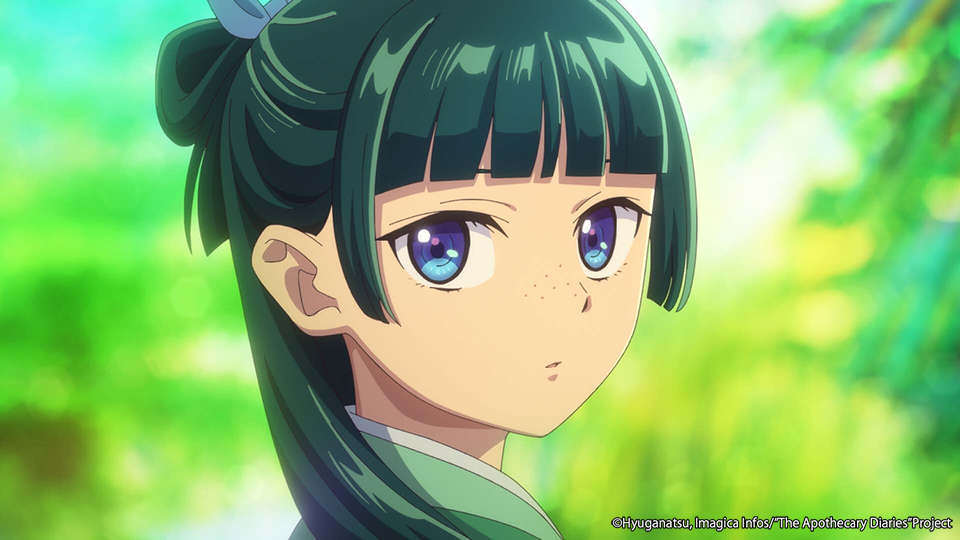
Role in the story
Maomao begins as someone pulled into the palace system and slowly becomes indispensable because:
- she can identify toxins, contaminants, and drug effects
- she understands how illness spreads through environments
- she is hard to bribe with status or romance
- she notices details others overlook because they are busy performing etiquette
Her value is not just medical. It is investigative. She sees the palace like a laboratory full of variables: diet, cosmetics, incense, stress, pregnancy complications, infections, and politics.
Personality and appeal
Maomao’s personality is defined by:
- curiosity without sentimentality: she will risk discomfort to learn something true
- self-preservation: she avoids attention because attention is dangerous
- dry humor: she can be funny without trying to be liked
- moral pragmatism: she helps when it makes sense, not because she wants applause
She often reads as older than her age because she has the emotional habits of someone who learned early that safety is earned through usefulness.
Strengths
- Expert knowledge of herbs, poisons, remedies, and dosage logic
- Strong observation and deduction
- Psychological realism: she understands how people lie and why
- Willingness to test hypotheses rather than chase rumors
Weaknesses
- She can underestimate how much people notice her, even when she tries to disappear
- She sometimes treats emotions like irrelevant noise, even when they are the real story
- Her blunt logic can create friction with people who rely on hierarchy and face-saving
Key relationships
- Jinshi: the relationship is built on tension between Maomao’s rational distance and Jinshi’s desire for control, closeness, or both.
- Luomen: her medical foundation and ethical compass. She respects him more than almost anyone.
- The consorts and attendants: Maomao is useful to them, but usefulness can be exploited. She has to choose carefully when to help.
If you are new to the series, it helps to treat Maomao as “the detective,” but remember her detective lens is medicine-first, not justice-first.
Jinshi
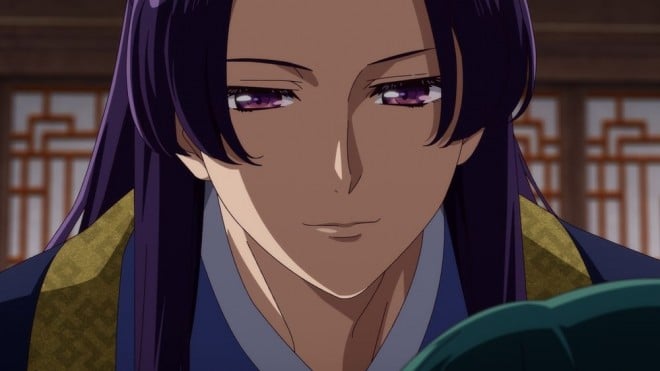
Jinshi is the character most likely to be misunderstood if you only look at surface traits. On the surface he is dazzling: beautiful, respected, and socially untouchable. Under that surface he is a person navigating a lethal institution where identity is power.
Role in the story
Jinshi functions as:
- Maomao’s entry point into palace mysteries
- the gatekeeper of the Inner Court, controlling access and information flow
- a political force, even when he pretends not to be
- the emotional counterweight to Maomao’s clinical mindset
He repeatedly pushes Maomao into situations where her skills solve problems, but each solution also shifts palace dynamics. Jinshi is one of the few people who understands exactly how valuable Maomao is and tries to keep her close.
Personality and appeal
Jinshi’s appeal comes from contradiction:
- he is charming, yet calculating
- he looks gentle, yet holds authority that can ruin lives
- he is publicly composed, yet personally reactive around Maomao
- he dislikes being controlled, yet operates inside an institution defined by control
Many readers describe Jinshi as “mysterious,” but the more accurate description is “curated.” His public self is an edited version.
Strengths
- Social intelligence and the ability to steer outcomes without obvious force
- Strong control over palace logistics and personnel
- Strategic patience when it matters
- Ability to weaponize reputation, beauty, and silence
Weaknesses
- Emotional impulsiveness where Maomao is concerned
- Difficulty accepting outcomes he cannot manage
- The palace itself: even Jinshi’s authority has constraints and enemies
Key relationships
- Maomao: the central dynamic. She is difficult to control and that makes her irresistible to him.
- Gaoshun: the trusted anchor who manages practical reality around Jinshi’s ambitions.
- The Inner Court: Jinshi’s work is inseparable from court politics, even when he claims otherwise.
If Maomao is the truth-seeker, Jinshi is the truth-manager. That difference drives the series.
Gaoshun
Gaoshun is Jinshi’s most important support character because he functions as the story’s stabilizer. When Jinshi becomes emotional or reckless, Gaoshun represents responsibility, procedure, and consequence.
Role in the story
Gaoshun is:
- Jinshi’s chief aide and operational backbone
- the person who turns Jinshi’s intentions into feasible plans
- a bridge between palace systems and human reality
- often the one who quietly protects Maomao from political fallout
He is also crucial because he helps the audience understand the palace hierarchy. When you are confused about who outranks whom, Gaoshun is usually acting in a way that signals the answer.
Personality
- calm, disciplined, and pragmatic
- loyal to Jinshi but not blind
- has the “tired parent” energy whenever chaos happens
- respects competence, which is why he tolerates Maomao
Gaoshun is the kind of character who makes an intelligent world feel believable.
The Inner Court and Rear Palace characters
The Inner Court is where reputation and reproduction become political currency. Many characters here matter not because they are “good” or “bad,” but because their position creates consequences.
Consort Gyokuyou
Gyokuyou is often framed as one of the most favored consorts, and she matters because her household becomes a central stage for medical mysteries and power dynamics.
Why she matters
- Her status makes her both protected and targeted
- Her pregnancies and health-related storylines create high stakes cases
- Her household includes attendants who become key information channels
How to remember her
Think “high status, high risk.” Anything involving Gyokuyou can ripple through the entire court.
Consort Lihua
Lihua is another major consort whose household intersects with important medical and political events.
Why she matters
- Her status creates a second major faction point in the Rear Palace
- Her health and family dynamics can become political weapons
- Her attendants and allies form a parallel information network to Gyokuyou’s side
How to remember her
Think “another center of gravity.” If Gyokuyou is one pole, Lihua is the other, and Maomao often ends up navigating both.
Ah-Duo
Ah-Duo is a character many readers remember because she feels different from typical court archetypes. She carries a sense of personal history and complicated positioning, and her presence hints that the palace’s “official story” is never complete.
Why she matters
- She represents deeper palace history and long-running consequences
- She often prompts readers to question what is known versus what is assumed
- Her ties to other key figures create long arcs of implication
If you want to avoid spoilers, treat Ah-Duo as “a key piece of the palace’s hidden timeline.”
Ladies-in-waiting and attendants
Attendants are not background characters in The Apothecary Diaries. They are the palace’s nervous system.
Why attendants matter
- They manage daily life: food, clothing, cosmetics, medicine, schedules
- They gossip, observe, and carry information between rooms
- They can become protectors, saboteurs, or both
They are often the first to notice symptoms or unusual behavior
A recurring pattern: Maomao solves a case, but the attendants decide whether the truth spreads safely or becomes a weapon.
Hongniang
Hongniang is a standout attendant figure often associated with managing household order and protecting a consort’s interests.
How to remember her: “competent household manager.” When she is on screen, things are usually being managed, cleaned up, or guarded.
Palace personnel, guards, and recurring officials
Basen
Basen is a recurring guard figure whose presence often signals security, enforcement, or a mission assigned by Jinshi’s side. He is useful because he helps ground palace intrigue in physical reality: not everything is solved by deduction alone.
How to remember Basen: “muscle with duty.” When the story needs someone to move fast, protect someone, or deliver force under orders, he is part of that toolset.
Lihaku
Lihaku often functions as a capable guard or officer figure who interacts with Maomao in a way that highlights her outsider status and the palace’s rigid boundaries.
How to remember Lihaku: “straightforward competence.” He tends to feel more direct than the court’s layered politics.
Maomao’s roots: the pleasure district and medical world
Maomao’s palace logic is inseparable from where she came from. The pleasure district is where she learned that people lie professionally, and medicine is where she learned that bodies reveal the truth anyway.
Luomen
Luomen is Maomao’s foundational influence. Whether you view him as adoptive father, mentor, or teacher, his importance is constant.
Why he matters
- He shaped Maomao’s medical education and discipline
- He models a type of competence that is quiet and ethical
- His history provides context for palace medicine and why knowledge can be political
How to remember him
Luomen is “medicine with restraint.” He represents the best version of professionalism: help, do no harm, and do not chase attention.
The courtesans and the pleasure district circle
The courtesans are not just aesthetic characters. They represent another power system where social skill is survival.
You will often see three courtesan names mentioned as a recognizable trio in Maomao’s background circle:
- Pairin
- Meimei
- Joka
Why they matter
- They demonstrate how women build agency inside constrained systems
- They show Maomao’s emotional baseline: she is not sheltered, she is observant
- They often supply information and context the palace lacks
How to remember them: “social intelligence specialists.” Where Maomao uses chemistry, the courtesans use human behavior.
Lakan
Lakan is a major figure whose connection to Maomao has long-term consequences. He is often described in fandom discussion as brilliant, unsettling, and difficult to categorize.
Why he matters
- He introduces a different style of intelligence, closer to strategy and games
- He creates pressure around Maomao’s identity and origin
- His presence escalates stakes beyond single-episode mysteries
How to remember Lakan: “a high-level player.” When he enters the story, the board gets bigger.
Because Lakan is tied to deeper revelations, many summaries stay cautious about details. If you are avoiding spoilers, treat him as a powerful figure whose interest in Maomao is never casual.
Character dynamics that define the series
A character list is useful, but The Apothecary Diaries is powered by relationships. These are the dynamics that help you understand why certain characters keep returning.
Maomao and Jinshi
This is the flagship dynamic: not just romance tension, but a conflict of values.
- Maomao wants to survive quietly and stay useful without becoming visible.
- Jinshi wants to keep Maomao close, partly because she is valuable, partly because she resists him.
Their relationship creates repeated questions:
- Can competence stay neutral in a political system?
- What happens when someone powerful becomes emotionally invested in someone uninvested in power?
- Is Maomao’s detachment a shield, or a limitation?
If you read the series as purely romance, you will miss the deeper engine: Jinshi represents the palace, Maomao represents reality. The palace keeps trying to overwrite reality.
Maomao and the consorts
Maomao’s relationship with consorts is rarely simple. She is not their friend in a casual sense. She is a tool, a risk, and sometimes a lifeline.
What makes these relationships interesting is that:
- consorts need Maomao’s truth, but truth can be dangerous
- Maomao needs consorts’ protection, but protection has strings
- attendants mediate everything, so trust is never private
In many arcs, Maomao is not solving a mystery for entertainment. She is solving it because someone’s position, child, or life is at stake.
Jinshi and Gaoshun
This is one of the strongest “working relationships” in the story.
- Jinshi is ambition, image, and leverage.
- Gaoshun is process, stability, and risk control.
Gaoshun’s presence prevents Jinshi from becoming an unrealistic fantasy figure. It also helps keep the story’s politics coherent: someone must handle logistics when someone else is busy being dramatic.
Maomao and Luomen
Maomao’s relationship with Luomen is one of the few places where you see softer loyalty in her character.
Luomen represents:
- the origin of her medical ethics
- her attachment to competence rather than status
- a reminder that knowledge has cost, history, and responsibility
When Maomao acts cold, Luomen’s influence is often the reason she still helps anyway.
How to remember the cast without memorizing every name
If you are struggling with names, use functions rather than titles.
The “solver”
Maomao: diagnoses, tests, deduces.
The “gatekeeper”
Jinshi: controls access, assigns tasks, manages outcomes.
The “operator”
Gaoshun and key guards: make things happen safely.
The “power centers”
Consorts: Gyokuyou and Lihua as major household poles.
The “information web”
Ladies-in-waiting and attendants: gossip, routines, access.
The “outside world anchors”
Luomen and the pleasure district circle: context and contrast.
Once you categorize characters by function, you can follow arcs even if you forget a name on first watch.
Notable characters readers often search for
This section is designed to match real search behavior: people remember a face or a role, then google “apothecary diaries characters” to reconnect dots.
The Emperor
The Emperor appears less frequently than the core cast, but he matters because:
- his favor shapes consort status
- his decisions define palace priorities
- his personal life becomes political currency
In a court story, the Emperor is not only a person. He is the rule-set.
Medical staff and specialists
The palace’s doctors and medical personnel matter because Maomao’s competence is unusual. Whenever an official doctor fails, Maomao’s presence becomes more valuable, and also more dangerous.
These characters often function as:
- rivals threatened by Maomao’s insight
- allies who respect results
- bureaucrats who fear responsibility
Rival factions and “later arc” figures
As the story expands, you will meet additional high-impact characters who shift the balance of power. If you are anime-only, it is normal to feel that the cast “gets bigger.” The narrative is designed to widen from small cases into structural politics.
A spoiler-light way to frame it:
- early story: mystery-of-the-week with recurring palace anchors
- mid story: recurring power players and longer consequences
- later story: identity, history, and state-level stakes
Why The Apothecary Diaries cast works so well
A lot of series have big casts. The Apothecary Diaries succeeds because each character has at least one of these traits:
They represent a system
Jinshi represents court management, consorts represent reproductive politics, attendants represent information flow, guards represent enforcement, and Maomao represents truth through science.
They create cost for knowledge
In many mysteries, knowing the answer ends the problem. In this series, knowing the answer can create a new problem: who benefits, who loses face, who gets blamed.
They are not defined by morality alone
Characters often feel realistic because they are motivated by:
- survival
- reputation
- loyalty
- ambition
- fear
- duty
Even sympathetic characters can do harmful things when incentives demand it.
FAQ: The Apothecary Diaries characters
Who is the main character of The Apothecary Diaries?
Maomao is the main character. The story follows her deductions, medical logic, and survival strategy inside the palace.
Is Jinshi the male lead?
Yes. Jinshi is the primary male lead and the central counterpart to Maomao, both in plot influence and relationship tension.
Who are the most important supporting characters?
The most consistently important supporting figures include Gaoshun, the major consorts (especially Gyokuyou and Lihua), key attendants, and Maomao’s outside-world anchors like Luomen.
Why are there so many attendants and palace women in the cast?
Because the Inner Court runs on routine and information. Attendants see the daily details that reveal illness, lies, and motive.
Are the courtesans important or just background?
They are important. The pleasure district characters explain Maomao’s worldview and give the series a second social system to contrast with the palace.
You may also like:
Has Miyazaki Done Any Manga Other Than Nausicaa?
How Many Chapters Are in the Average Manga Volume?
What Is the Difference Between Manga and Anime?
