
The most important Blue Lock characters are Yoichi Isagi, Meguru Bachira, Rin Itoshi, Seishiro Nagi, Shoei Barou, Hyoma Chigiri, Rensuke Kunigami, Reo Mikage, Ryusei Shidou, and Jinpachi Ego. If you want a clear guide that tells you who’s who, what each character’s “weapon” is, and why they matter across the major arcs, this breakdown will keep you fully oriented while reading on HariManga.
Why Blue Lock characters are so easy to get obsessed with?
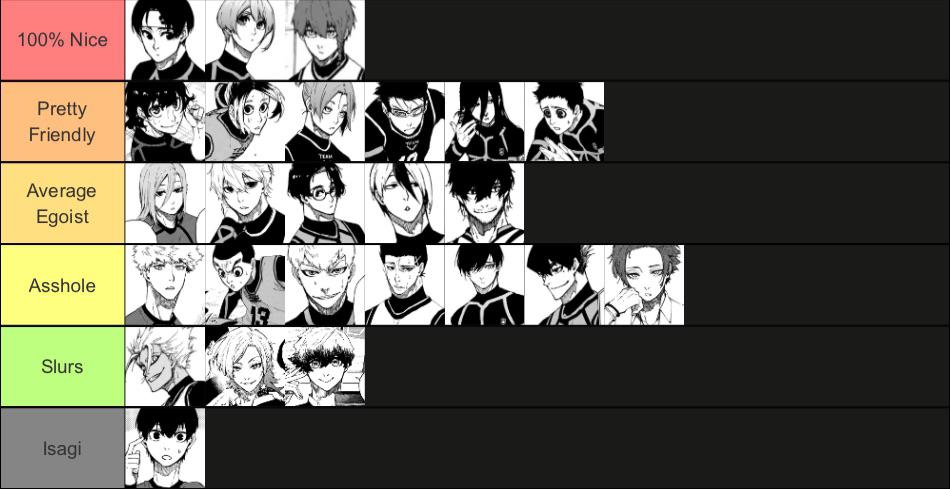
Blue Lock is not written like a normal sports series where everyone slowly becomes a better teammate. It’s written like a competitive laboratory where every player is forced to turn their personality into a scoring method.
That’s why Blue Lock characters feel distinct even in a massive roster. Each major character is designed around:
A weapon
A repeatable scoring advantage or match-winning trait, such as field reading, 1v1 dribbling, explosive acceleration, trapping, physical dominance, or penalty-area instinct.
An ego style
Some characters want to devour the field, some want to control it, some want to overwhelm it with talent, and others want to be the only king allowed to score.
A rivalry trigger
Blue Lock does not grow characters through friendly practice. It grows them through friction. The cast evolves when someone threatens their identity.
If you learn the cast through these three lenses, the story becomes much easier to follow even as it expands into the U-20 phase and the Neo Egoist League.
The core Blue Lock characters you should learn first
If you only memorize one group, memorize this one. These characters are the story’s spine and appear in the biggest turning points.
Yoichi Isagi
Isagi is the main protagonist and the most consistent “evolution engine” in Blue Lock. He is not built as the flashiest striker. He is built as the striker who can keep upgrading.
Weapon
Field reading and spatial awareness. Isagi’s strength is identifying where goals will be born before other players react.
Why he matters
Isagi represents the Blue Lock philosophy in action: break yourself, rebuild yourself, repeat. His growth is less about gaining one special move and more about learning how to turn any situation into a solvable puzzle.
Personality
Focused, self-critical, and quietly ruthless when he commits. He’s polite, but he is not soft. Once he recognizes what he needs to do to win, he does it.
Meguru Bachira
Bachira is the embodiment of creative freedom. If Isagi is logic, Bachira is instinct. His style is unpredictable, playful, and dangerous because defenders cannot read his rhythm.
Weapon
Elastic dribbling and 1v1 improvisation. Bachira can turn tight spaces into open lanes through movement that feels irrational but works.
Why he matters
Bachira is one of the first characters to show what Blue Lock means by “ego.” For him, ego is not arrogance. It’s authenticity. He plays the way he wants, and that honesty becomes power.
Personality
Charming, hyper-creative, sometimes eerie in how naturally he embraces chaos. He’s also emotionally direct, which makes him a key relationship anchor early on.
Rin Itoshi
Rin is the cold benchmark. When Blue Lock wants to show what a top-tier striker looks like, it often uses Rin to set the ceiling.
Weapon
Total-package striker skill and match control. Rin is dangerous because he can dominate both the scoreboard and the flow of the game.
Why he matters
Rin is not simply skilled. He plays with an obsessive intensity that turns games into personal missions. He is a rival who forces others to confront their limits.
Personality
Detached, disciplined, intense. He doesn’t seek approval. He seeks superiority and control.
Seishiro Nagi
Nagi is the prodigy whose talent looks like cheating. He begins as someone who never had to try, which becomes the most interesting part of his arc once he finally meets resistance.
Weapon
Supernatural first touch and trapping. Nagi’s control allows him to create shots from positions other players cannot even stabilize.
Why he matters
Nagi forces the story to confront a hard truth: talent exists. Not everyone starts equal. Blue Lock’s pressure is designed to see whether talent will evolve into dominance or collapse under challenge.
Personality
Lazy on the surface, but deeply curious once something hooks him. When he cares, he becomes terrifying.
Reo Mikage
Reo is ambition with structure. He is not defined by one flashy move. He is defined by versatility, planning, and a willingness to build a complete skill set.
Weapon
Adaptability and all-around competence. Reo’s strength is doing what the team needs while still hunting a striker identity.
Why he matters
Reo’s relationship with Nagi creates one of the series’ most important emotional and competitive dynamics. He embodies the tension between supporting someone else and proving you are your own main character.
Personality
Confident, organized, strategic, and emotionally intense beneath the polished surface.
Shoei Barou
Barou is Blue Lock’s clearest example of ego as domination. He wants the field to revolve around him. He wants defenders to fear him. He wants teammates to obey his gravity.
Weapon
Power, presence, and a scoring lane he forces into existence through strength and intimidation.
Why he matters
Barou shows that selfishness can be refined into a functional striker identity. He becomes more dangerous when he learns how to transform stubbornness into strategy.
Personality
Aggressive, prideful, dramatic, and obsessed with being the king.
Hyoma Chigiri
Chigiri’s story begins with fear and ends with freedom. He is one of the most emotionally satisfying early arcs because his weapon is tied to a genuine psychological barrier.
Weapon
Explosive acceleration and sprint-based lane destruction.
Why he matters
Speed in football is not just speed. It is the ability to invalidate defensive shape. Chigiri forces the entire match to adjust to him.
Personality
Initially cautious and restrained, then increasingly confident once he commits to running without hesitation.
Rensuke Kunigami
Kunigami represents the classic “heroic striker” ideal early on, then Blue Lock challenges that identity hard.
Weapon
Physicality and direct finishing power.
Why he matters
Kunigami is important because he shows what happens when a character who believes in straightforward righteousness gets pushed through an environment that rewards selfish survival. His arc becomes a signal that Blue Lock changes people.
Personality
Serious, principled, intense. He carries a sense of justice that Blue Lock constantly tests.
Ryusei Shidou
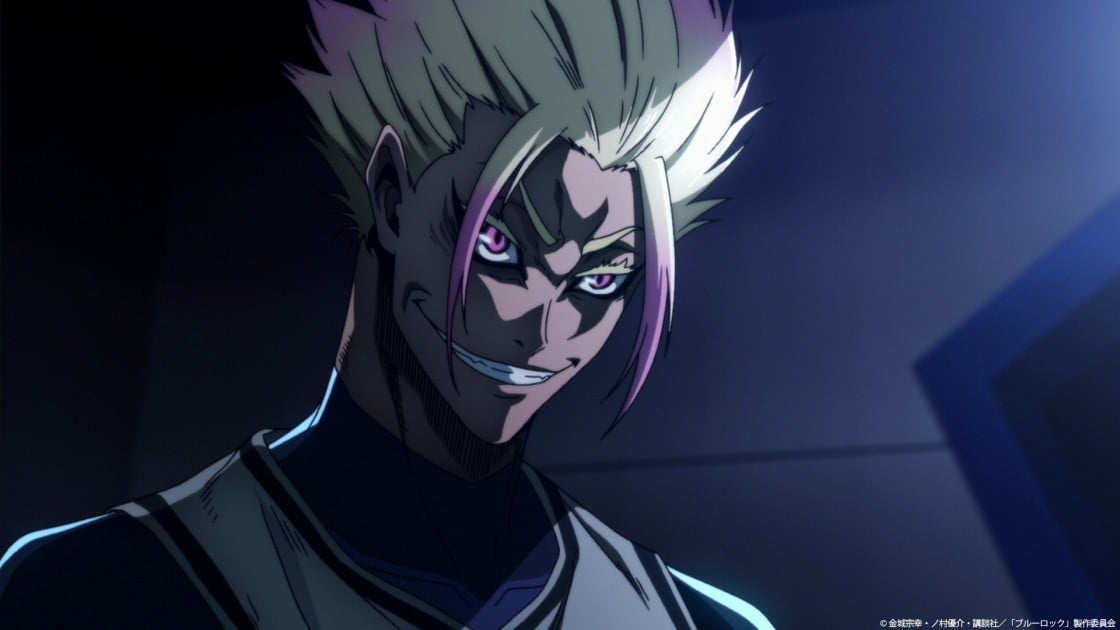
Shidou is raw scoring instinct pushed to the edge. He is violent in personality, but his penalty-area sense is elite. He turns the box into a hunting ground.
Weapon
Predatory finishing and explosive instincts near goal.
Why he matters
Shidou forces the story into its most savage striker logic: scoring is hunger. His presence changes how everyone plays because he refuses to be contained emotionally or tactically.
Personality
Chaotic, provocative, aggressive, and strangely honest in how purely he lives for goals.
The Blue Lock staff and adults who define the system
Blue Lock characters are not only players. The project itself is a character, and the adults running it shape every arc.
Jinpachi Ego
Ego is the architect of Blue Lock and the philosophy behind it. He is both mentor and antagonist, depending on how you interpret his methods.
Role: He designs the selection structure, forces psychological pressure, and defines what “ego” means in the Blue Lock universe.
Why he matters: If you don’t understand Ego, you don’t understand why the players evolve the way they do. He rewards evolution, results, and scoring identity, not morality.
Personality: Cold, theatrical, hyper-logical, and obsessed with one outcome: creating a striker who can carry Japan.
Anri Teieri
Anri is the operational backbone. She represents the real-world logistics that keep the project functioning while Ego runs mental warfare.
Role: Management, coordination, and institutional stability.
Why she matters: She gives the story a grounded adult perspective and highlights that Blue Lock is not only a game, it is a funded national experiment.
Key early roster characters that still matter
Blue Lock’s earliest team structures introduce characters who remain relevant because they represent specific archetypes and growth paths.
Gin Gagamaru
Gagamaru is pure athletic instinct. He’s the type of player whose physical gifts let him do the unexpected.
Weapon: Reflexes, reach, and body control.
Why he matters: He becomes a reliable “clutch variable” in situations where technique alone is not enough.
Ikki Niko
Niko is one of the best examples of a character evolving from quiet observer to active threat.
Weapon: Tactical reading and positioning development.
Why he matters: He reinforces that Blue Lock rewards intelligence and adaptation, not just flashy talent.
Jingo Raichi
Raichi is relentless intensity. He brings a defensive, disruptive kind of ego that still impacts striker battles.
Weapon: Aggression, pressing, and physical duels.
Why he matters: He shows that Blue Lock’s striker program still needs players who can win battles off the ball.
Gurimu Igarashi
Igarashi is the survivalist. He often functions as comic relief, but his persistence highlights how unpredictable survival can be.
Weapon: Staying alive in a system designed to eliminate you.
Why he matters: He reflects a truth of competitive environments: not everyone who survives does so because they are the best. Sometimes they survive because they adapt socially and mentally.
The “specialist identity” characters who define Blue Lock’s flavor
Blue Lock becomes easier to follow when you see each character as a specialized striker concept.
Tabito Karasu
Karasu is controlled, analytical, and ruthless in how he targets weaknesses.
Weapon: Pressing, marking, and exploiting opponent habits.
Why he matters: He is a reality check. He punishes players who rely only on talent without structure.
Eita Otoya
Otoya is built around movement and invisibility.
Weapon: Off-the-ball slipping and timing.
Why he matters: He shows that the most dangerous player is not always the one on the ball. Sometimes it is the one who disappears until the goal is inevitable.
Kenyu Yukimiya
Yukimiya represents 1v1 pride and personal conviction.
Weapon: Dribbling strength, shooting options, and stubborn self-belief.
Why he matters: He embodies the line between confidence and self-destruction. Blue Lock often tests whether ego becomes clarity or delusion.
Jyubei Aryu
Aryu is the physical stylist. He weaponizes length, reach, and presence.
Weapon: Physical advantage and aerial or reach-based dominance.
Why he matters: He adds variety to the striker ecosystem, proving Blue Lock is not only about technique.
Aoshi Tokimitsu
Tokimitsu is anxiety wrapped around raw stamina and strength.
Weapon: Endurance and body strength.
Why he matters: He is a reminder that mentality does not always look like confidence. A character can be terrified and still be powerful.
Zantetsu Tsurugi
Zantetsu is acceleration and directness.
Weapon: Explosive speed and straightforward finishing patterns.
Why he matters: He provides contrast to characters who rely on vision or creativity. Sometimes the simplest route is still lethal if it’s fast enough.
U-20 era characters that expand the world
When Blue Lock collides with Japan’s existing football system, the cast expands beyond the facility and raises the stakes.
Sae Itoshi
Sae represents world-level evaluation. He is the character who makes Blue Lock players confront the global ceiling.
Weapon: Elite technique, cold control, and playmaking superiority.
Why he matters: Sae forces a brutal question: are you truly elite, or only elite inside Blue Lock?
Oliver Aiku
Aiku is a defender who becomes a true rival, which is important because Blue Lock is striker-centered.
Weapon: Defensive reading, physical control, and shutting down striker lanes.
Why he matters: When defenders become named threats, Blue Lock proves it understands that a striker’s ego is meaningless unless it can break elite resistance.
Neo Egoist League characters and pro-level rivals
As the story moves into a pro environment, Blue Lock introduces new characters who feel like “final boss prototypes.” You don’t need to memorize every name immediately, but you should understand the function of these characters: they represent the next level of football reality.
Michael Kaiser
Kaiser is one of the most important international-level rivals. He represents a striker identity that is already polished, arrogant, and deadly.
Weapon: Clinical finishing and elite pro-level decision-making.
Why he matters: He tests whether Blue Lock’s egoism can survive against someone who already lives at a higher competitive tier.
Alexis Ness
Ness often functions as a technical partner inside a striker-centered ecosystem.
Weapon: Support play that still has ego, meaning it is never neutral.
Why he matters: Blue Lock treats “support” as a weapon, not a background role. Ness illustrates how enabling a striker can become its own form of dominance.
Don Lorenzo and elite defenders
International defenders raise the realism. They force Blue Lock players to sharpen their weapons beyond youth-level success.
Why they matter: A striker can look unstoppable against average defenders. Against an elite defender, the striker must evolve or disappear.
Why Episode Nagi changes how you see certain Blue Lock characters
Episode Nagi reframes the psychology of characters who might otherwise feel like archetypes.
- Nagi becomes more than “lazy genius.” You see how his motivation actually forms.
- Reo becomes more than “rich friend.” You see ambition, dependence, and identity conflict.
- Zantetsu becomes more than a speed gag. You see the competitive structure behind his role.
If you want a deeper understanding of Blue Lock characters, Episode Nagi is one of the best lenses.
The easiest way to remember Blue Lock characters
When the roster grows, names blur. The simplest method is to remember them by weapon category.
Vision and game reading
Isagi, Rin, Niko, Karasu, and Hiori style characters win by reading the field faster than others.
1v1 creativity and dribbling
Bachira, Yukimiya, and Otoya-style characters win by breaking defenders directly.
Physical dominance and power finishing
Barou, Kunigami, and Tokimitsu style characters win by imposing the body.
Speed and space destruction
Chigiri, Zantetsu style characters win by making distance meaningless.
Touch genius and improvisation
Nagi is the symbol here. His control creates shots that should not exist.
Use this method while reading on HariManga and you will rarely lose track of the cast again.
The most talked-about Blue Lock characters
If you only want the headline names that dominate most discussions, edits, and arc debates, this shortlist covers the majority of fan conversation:
- Yoichi Isagi
- Rin Itoshi
- Seishiro Nagi
- Meguru Bachira
- Shoei Barou
- Hyoma Chigiri
- Rensuke Kunigami
- Ryusei Shidou
- Reo Mikage
- Jinpachi Ego
Everything else branches outward from these core identities.
FAQ: Blue Lock Characters
Who is the main character in Blue Lock?
Yoichi Isagi is the main protagonist, and the story follows his evolution as a striker.
Who are the most important Blue Lock characters?
Isagi, Bachira, Rin, Nagi, Barou, Chigiri, Kunigami, Reo, Shidou, and Ego are the most essential to understanding the series.
Who is the best dribbler in Blue Lock?
Bachira is the most iconic dribbler, with other strong 1v1 specialists appearing as the series expands.
Who is the fastest character in Blue Lock?
Chigiri is the signature speed threat, with other acceleration specialists also competing in that lane.
Who is the strongest physically in Blue Lock?
Barou and Kunigami are commonly framed as power-focused strikers, while others contribute strength and stamina differently.
Who is the smartest player in Blue Lock?
Isagi and Rin are often treated as top field readers, with other tactical characters also rising as the cast grows.
Who is Jinpachi Ego?
Ego is the creator and director of Blue Lock, designing the experiment to produce Japan’s ultimate striker.
What does “weapon” mean in Blue Lock?
A weapon is a player’s repeatable advantage that creates goals, such as vision, dribbling, speed, finishing instinct, or physical dominance.
Who are the most important rivals in Blue Lock?
Rin, Barou, Nagi, and Shidou are among the most defining rivals, with pro-level rivals later raising the ceiling.
What is the fastest way to learn the Blue Lock cast?
Start with Isagi, Bachira, Nagi, Reo, Barou, Chigiri, Kunigami, Rin, Shidou, then learn Ego and the major supporting specialists as they appear.
You may also like:
Black Clover Characters: Meet the Heroes, Villains, and Magical Powers of the Clover Kingdom
Is Black Clover Manga Finished? A Complete Overview of the Manga’s Status and Future
How Old is Yuji Itadori? Discover the Age of the Jujutsu Kaisen Protagonist
